
Best Multivitamins For Kids (2026)


As parents, we want to ensure that our children get everything they need for healthy growth and development. While a varied diet is the foundation, the modern pace of life, picky eating habits, and flu season often require a little help in the form of supplements.
In this guide, we've combined expert advice on key nutrients and reviews of the best children's multivitamins available in our pharmacy to ensure you're getting the essential nutrients you need.
In this article
What are multivitamins for children?
Multivitamins for children are ready-made combinations of vitamins and minerals adapted to the needs of children's bodies.
These products are usually available as syrups, chewable tablets, liquid supplements, gummies, or other forms that are easier for children to consume.
Multivitamins for children are usually formulated to contain the amounts of vitamins and minerals necessary for healthy growth and development of a child.
- Vitamin A, C, D, E, K and B vitamins
- Minerals such as calcium, iron, zinc, manganese
What are nutrients?
Before we go further into exploring the options, let's briefly repeat what nutrients are.
Nutrients are substances that the body uses for energy, growth, development and maintenance of vital functions. They are crucial and must not be neglected in growing and developing children.
We divide them into several groups:
- Macronutrients: Carbohydrates, proteins, fats and water.
- Micronutrients: Vitamins and minerals.
- Other nutrients: Antioxidants, dietary fiber.
How do vitamins for children work?
Children have special needs because their bodies are developing and growing rapidly, so it is important to provide them with enough nutrients to support their health. Vitamins and minerals are nutrients that play a key role in the growth, development and general health of children.
Here's how vitamins for children work:
Vitamins and minerals support the formation of organs, muscles, bones, brain and nervous system. For example, vitamin D is important for calcium absorption and bone mineralization, while vitamin A supports the growth and development of tissues and organs.
Vitamins also play an important role in strengthening the immune system of children and help them fight infections and diseases. For example, vitamin C supports the body's immune response to infections and helps wounds heal faster.
A child's mental development requires large amounts of vitamins and minerals. Omega fatty acids support brain development and cognitive function.
Vitamins are important for converting food into energy that children need for daily activities. B complex vitamins are especially important for nutrient metabolism and energy production in the body.
Vitamin E is an antioxidant that protects cells from damage, and biotin (vitamin B7) supports the growth and development of hair and nails, so it is important to know that vitamins and minerals are necessary for healthy hair, skin and nails.
Should the child take vitamins?
The decision on whether a child needs vitamins is extremely individual. It depends on several factors such as the child's eating habits, state of health, age and lifestyle (for example, the child is an athlete).
Children who do not consume enough variety of foods to cover the necessary nutrients benefit from taking vitamins.
Children who are in a period of rapid growth and development or are exposed to stress and intense physical exertion also benefit from taking vitamins.
If there are certain health conditions, diseases or some reason why the child has a limited diet, it is good to consult with a doctor or pharmacist about the child's needs for additional intake of vitamins and minerals.
It is important to note that multivitamins for children are not a substitute for a balanced diet, but should be used as a supplement when necessary and according to the instructions of a doctor or nutritionist.
Before starting a multivitamin for a child, it is always best to consult with a pediatrician or other child health professional to avoid overdosing on supplements or side effects.
What dose of vitamins do children need?
Doses of vitamins and minerals for children vary depending on the child's age, individual needs, state of health and eating habits.
Most multivitamins state on the package the recommended daily dose of vitamins for children. It is important to follow this recommended daily intake, which is on the package, and to consult a doctor or pharmacist if you have any doubts. If it happens that the method of use for children is not indicated on the packaging, it is mandatory to consult a health professional.
Which form of multivitamin for children is best?
Vitamins for children come in different forms, and each of them has some advantages.
Here are some forms of multivitamins for children:
- Syrup: Liquid form of multivitamin suitable for children. It is dosed using a measuring spoon or cup.
- Chewable tablets: Suitable for people who like to chew food supplements.
- Candies: Multivitamins for children often come in the form of candies, which are a pleasant and tasty way to take nutritional supplements.
- Gummies: Similar to candy, gummies are a tasty and fun way to take multivitamins for kids.
- Drops: A liquid form of vitamin that is usually dosed with a dropper. It is suitable for children or adults who prefer this way of taking food supplements.
- Effervescent tablets: They often come with sweeteners and flavorings that make this liquid dietary supplement pleasant to use.
- Suspension: A liquid form of a multivitamin that contains suspended particles that must be shaken before use.
- Tablets: The most common form of dietary supplements suitable for adults who have no problems swallowing this form.
- Capsules: Easier to swallow due to their smaller shape. They may be suitable for those who find it difficult to swallow a pill.
- Dragees: A solid form of dietary supplement that is easier to swallow due to its rounded shape.
- Bottle: Some multivitamins come in liquid form in ready-to-use bottles.
- Granules: Dissolves in liquid or comes in bags ready for "direct" use in the mouth.
How to choose the best multivitamin for children?
The best multivitamins have a good price-quality ratio, are often pleasantly flavored, and are made in a way that makes them easier to give to a child.
Before choosing a product, it's important to know what you're looking for. Some of the most important vitamins for children are vitamin D (normal growth and development), B vitamins (energy and concentration in school), vitamin C (defense against colds), zinc and iron (cognitive development and body resistance).
Vitamins for newborns
For newborns (babies up to one month old) and infants during the first year, the most important vitamins are those that ensure proper blood clotting and bone development, as they are often not present in sufficient quantities in breast milk:
- Vitamin K: It is crucial immediately after birth to prevent rare but dangerous bleeding (hemorrhagic disease of the newborn). Most babies receive a single injection of vitamin K in the hospital, and, if recommended by their pediatrician, the administration can be continued in the form of drops (often in combination with vitamin D3) for the first three months.
- Vitamin D3: Essential for calcium absorption and the prevention of rickets. Supplementation of 400 IU (10 µg) daily is recommended starting from the second week of life, regardless of whether the baby is breastfed or using formula.
- DHA (Omega-3 Fatty Acids): Although not technically a vitamin, it is often recommended in combination with vitamin D to support brain and vision development in newborns.
- Vitamin B12: It is important only in specific cases, primarily if the mother is exclusively breastfeeding on a strict vegan diet, because in that case the baby can develop a serious deficit.
Babytol D3+K1 is a food supplement for supplementing vitamin D3 and vitamin K1 in newborns and infants from 2 weeks to 3 months of age. It contains the recommended daily dose of 10 µg of vitamin D3 (400 IJ) and 25 µg of vitamin K1 in one twist-off capsule.
 Babytol D3 + K1, 30 Capsules, Vitamin Supplement For Newborns - 2-3 Weeks Old
Vitamins for children from 1 year
For children from 1 year old, it is important to ensure a balanced diet that will provide them with all the necessary nutrients for healthy growth and development.
Children who are exclusively breastfed are at high risk of vitamin D deficiency. The results of a 2022 study showed severe vitamin D deficiency in 15% of prenatal mothers, while 54% were vitamin D deficient.
Here are some vitamins and minerals that are important for children at the age of 1:
- Vitamin D: It is important for bone health and the immune system. A child can get vitamin D from sun exposure, but additional intake may be needed if the child is not exposed to enough sun or if there is a risk of vitamin D deficiency.
- Iron: It is necessary for the formation of red blood cells and general health. Iron deficiency can lead to anemia.
- Vitamin A: It is essential for growth and development, the immune system, vision and skin.
- Vitamin C: It is needed for a healthy immune system, growth and development, and iron absorption.
- Vitamin B12: It is necessary for the development of the nervous system and the formation of red blood cells.
Biorela Choco Multi Kids is a 3 in 1 food supplement for healthy immunity of children in the form of delicious milk chocolate. It contains cultures of probiotic bacteria, vitamins and minerals necessary for the healthy growth and development of children and strong immunity. It contains as many as 12 vitamins, 3 minerals and two cultures of good bacteria.
 Biorela, Choco Multi Kids, 20 Chocolate Bars, For Immunity and Growth – 1 Year and Older
Vitamins for children from 2 year
Children at the age of 2 still have similar nutritional needs as children at the age of 1:
- Vitamin D: The need for vitamin D remains important even at the age of 2 years. Children at this age still need enough vitamin D for bone health and the immune system.
- Iron: Iron needs remain important at age 2, as iron is essential for red blood cell formation and general health.
- Vitamin A: The need for vitamin A remains important even at the age of 2 years, since this vitamin is essential for growth, development, the immune system, vision and skin.
- Vitamin C: The importance of vitamin C also remains the same at the age of 2 years. Children should consume enough vitamin C to support the immune system, growth and development, and iron absorption.
- Vitamin B12: The child still needs vitamin B12 for the development of the nervous system and the formation of red blood cells.
KinderImmun Dr. Wolz is a food supplement that contains vitamins, beta glucan and colostrum. The most complete formula is specially designed for children of school and preschool age, and it is also suitable for adults.
 Dr. Wolz, KinderImmun, 65g, Vitamins, Beta Glucan and Colostrum - 2 Years and Older
Vitamins for children from 12 years old and children in puberty
Children ages 12 and older need a wide range of vitamins and minerals to support their growth, development, and efforts in school and sports.
Vitamins and minerals that are important at this age are:
- Vitamin A: It is important for eye health, growth and bone development.
- Vitamin C: Plays a role in strengthening the immune system, wound healing and iron absorption.
- Vitamin D: Very important for bone health and proper development.
- Vitamin E: A powerful antioxidant that helps protect cells from damage.
- Vitamin K: Important for blood clotting and bone health.
- B complex vitamins: They play an important role in energy metabolism and the function of the nervous system.
- Calcium: Important for healthy bones and teeth.
- Magnesium: Essential for bone, muscle and nerve health.
- Iron: A key mineral for oxygen transport in the body and general health.
- Folic acid (Vitamin B9): Important for the proper development of the nervous system.
The multivitamin-multimineral formulation Kangavites, intended for children to compensate for the daily needs of vitamins and minerals, is enriched with high-value supplements of fruits and vegetables, bioflavonoids and lecithin.
Supradyn Kids make a sweeter contribution to the healthy diet of children and adolescents aged 3 to 17, supporting growth and development and the immune system.
 Supradyn®, Kids, 60 Tablets, Support Growth and Development - 3-17 Years
Multivitamin-multimineral formulation Kangavites is intended for children aged six and older. It is used to supplement the daily needs of vitamins and minerals and is enriched with high-value fruit and vegetable supplements, bioflavonoids and lecithin.

Vitamins for better memory and concentration
A varied diet containing vitamins and minerals is important for a healthy brain and nervous system of the child. Lack of vitamins and minerals can affect brain function.
Here are a few ways nutrients affect children's cognitive growth and development:
- Omega fatty acids: Omega-3 fatty acids, specifically EPA (eicosapentaenoic acid) and DHA (docosahexaenoic acid), are crucial for the overall health and development of preschool and school-aged children. Dietary supplements with omega 3 and 6 can improve reading ability.
- Vitamin D: High levels of cognitive development were more common in children who took vitamin D. Vitamin D plays an important role in brain health and nervous system function.
- Vitamins B, E, magnesium, zinc and copper: Higher intakes of folate, vitamin D, vitamin E, magnesium, zinc and copper are also associated with higher levels of cognitive development.
- Zinc and calcium: Dietary supplements with zinc and calcium can increase a child's height.
Vitamin A: Vitamin A supplements may improve weight gain in preschool children with stunted growth. - Vitamin C: The antioxidant properties of vitamin C help protect the brain from oxidative stress and inflammation. In addition, vitamin C participates in the synthesis of neurotransmitters such as noradrenaline, which are important for alertness and concentration.
- Iron: Iron deficiency can lead to fatigue and reduced concentration. Iron is important for a healthy supply of oxygen to the brain.
- Choline: Choline is an essential nutrient crucial for memory and learning. A lack of choline can negatively affect cognitive functions.
Esprico is a dietary supplement in capsule form for children containing fish oil (EPA 400 mg and DHA 40 mg), evening primrose seed oil, magnesium and zinc. It has an orange flavor.
 Esprico, 30 Suspension or 60 Capsules, For Children and Adults, Concentration and Brain Function
Strengthening immunity in children
Strengthening immunity in children is important for their general health and resistance to infections and diseases.
Here are some steps parents can take:
- Quality and balanced diet: Ensure that the child eats a variety of foods: vegetables, fruits, whole grains, proteins from meat, fish, eggs, dairy products and legumes. Food rich in a variety of foods provides all important nutrients.
- Enough sleep: Ensure that the child gets enough sleep every night and develops a quality routine. Sleep plays a key role in restoring and strengthening immunity.
- Redovita physical activity: Encourage children to engage in regular physical activity. Playing outdoors, cycling, running and participating in sports activities help to strengthen the immune system and general health.
- Hygiene: Teach children proper hygiene, including regular hand washing especially before eating, after using the toilet and after returning home. Proper hygiene helps prevent the spread of infections.
- Vaccination: Regular vaccination according to the pediatrician's instructions helps to protect children from serious diseases and build specific immunity against certain pathogens.
- Encouraging social connections: Encourage the child to maintain social connections and relationships with peers, especially in today's world where we spend most of our time behind a screen.
- Stress reduction: Try to reduce stress in the child's life. Stress can weaken the immune system, so it is important to provide support, understanding and emotional stability to the child.
- Regular health check-ups: Regular check-ups and visits to the pediatrician serve to monitor the child's health and growth and for early detection of possible health problems.
- Multivitamin supplementation for children: When necessary, provide proper amounts of multivitamins to supplement the child's diet.
Imunosal the syrup contains a combination of highly purified Goldcell beta-glucan in an amount suitable for children and ingredients (vitamins and zinc) that contribute to the normal function of the immune system.

Vitamin C for children
Vitamin C (ascorbic acid) is essential for children because it acts as an all-round protector and builder of the developing organism. Its most important roles are:
- Iron absorption: Vitamin C is the best ally in the fight against anemia because it drastically improves the utilization of iron from plant sources (such as legumes and spinach) if consumed in the same meal.
- Strengthening immunity: Helps in the production of white blood cells that protect the child from infections, colds and viruses.
- Building tissue and bones: It is necessary for the formation of collagen, a protein that builds skin, cartilage, muscles and bones, and helps wounds and scrapes heal faster.
- Powerful antioxidant: Protects cells from damage caused by free radicals and supports overall neurological health.
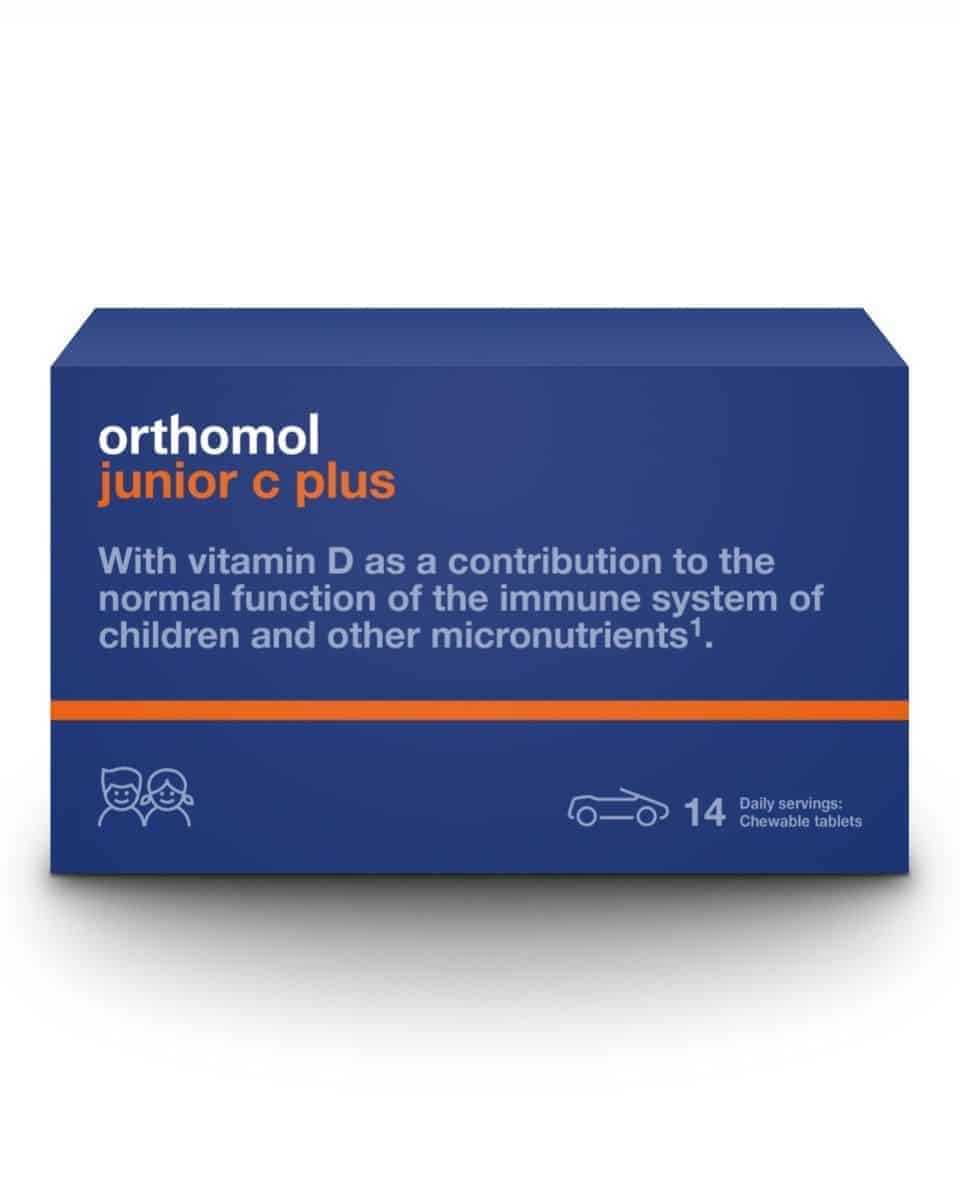
Orthomol Junior C plus is used for colds, tonsillitis, laryngitis, otitis media, pneumonia, rhinosinusitis and asthma. It has been clinically proven to reduce micronutrient concentrations in sick children compared to healthy children.
Vitamin D for children
Vitamin D, often called the “sunshine vitamin,” is crucial for children because it acts more like a hormone than a regular vitamin, affecting nearly every system in the body. Its key roles include:
- Building strong bones and teeth: Its primary function is to allow the body to properly absorb calcium and phosphorus from food. Without enough vitamin D, bones become soft and brittle, which can lead to rickets – a disease that causes deformities in the bones of the legs and chest.
- Immune system support: Vitamin D plays a critical role in “activating” the body’s defense cells, helping children more easily fight viral and bacterial infections, including colds and flu.
- Muscle health: It is necessary for normal muscle function and strength, which is important for a child's motor development and stability during movement.
- Long-term health: Research suggests that adequate vitamin D levels in childhood may reduce the risk of developing autoimmune diseases (like type 1 diabetes) and certain chronic conditions later in life.
Vitamin D deficiency is very common in today's society, including among children. Recommended doses of vitamin D for children vary depending on age: 10-15 µg (400-600 IU) for infants and young children, according to the European Food Safety Authority (EFSA).
Childlife Vitamin D3 is a liquid dietary supplement in drops. It contains cholecalciferol and natural berry flavor.
 ChildLife, Vitamin D3, 29,6 ml, For Growth and Bone Development of Children - 6 Months and Older
Iron for children
Iron is one of the most important minerals for a child's body, as it serves as "fuel" for intense physical and cognitive growth. Its key role is manifested in several vital functions:
- Oxygen transport: Iron is a major component of hemoglobin, the protein in red blood cells that carries oxygen from the lungs to all organs and muscles. Without enough iron, organs don't get enough "energy" to function properly.
- Brain development and cognitive functions: Iron is necessary for the formation of myelin (nerve sheath) and neurotransmitters. Its deficiency at an early age can lead to permanent difficulties in learning, memory, concentration and poorer performance in school.
- Immunity: This mineral supports the functioning of the immune system, helping the body fight infections and diseases more effectively.
- Physical growth and energy: Children with adequate iron levels have more energy for play and physical activity, while a deficiency often causes chronic fatigue, weakness, and paleness.
Floradix Iron tonic contains digestible organic iron, B vitamins, vitamin C, carefully selected herbal extracts, and delicious fruit juices.
 Floradix, Tonic With Iron, 250ml, Easily Digestible, Suitable for Pregnant Women - 3 Years and Older
Vitamin syrup for children
Imunosal The liquid dietary supplement contains a combination of highly purified Goldcell beta-glucan in an amount suitable for children. It contributes to the normal function of the immune system, normal mental performance and cognitive functions, and the reduction of tiredness and fatigue.
Vitamin tonic for children
Floradix Kindervital is a tonic with vitamins, calcium and herbal extracts for children. It is suitable for children from one to four years old.
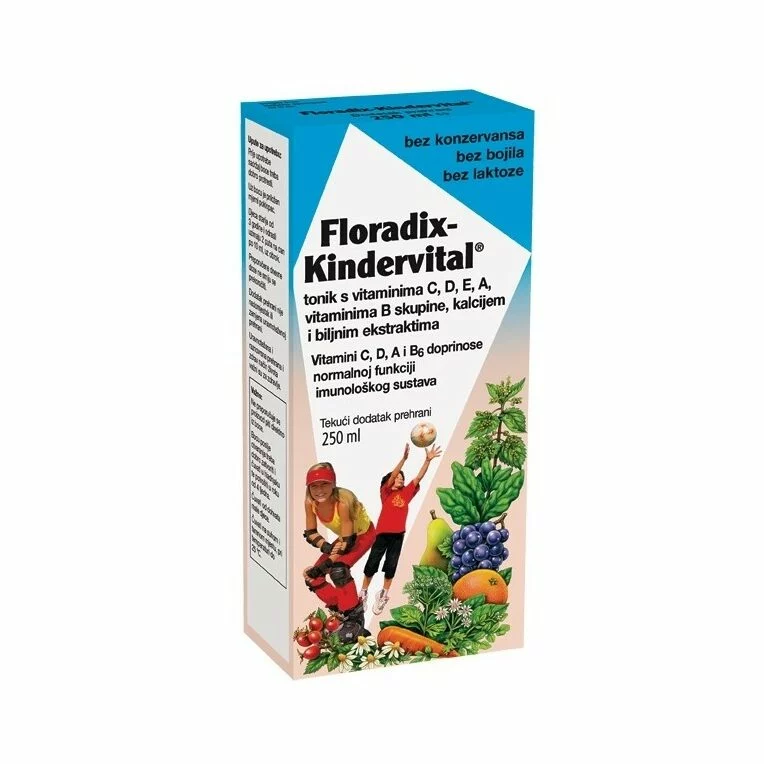 Floradix, Kindervital, 230ml, Tonic With Vitamins, Calcium and Plant Extracts - 1 Year and Older
Vitamins with probiotics for children
Specific strains of lactic acid bacteria and bifidobacteria that naturally inhabit children's intestines are crucial for healthy development. Probiotics for developing children are not a universal solution, their selection should depend on the child's specific needs, such as boosting immunity, relieving colic, or recovering from antibiotics.
View product catalog: Probiotics for children
Vitamins for child athletes
Children who play sports have increased nutrient needs due to increased activity, recovery and muscle growth.
Here are some vitamins and minerals that are especially important for child athletes:
- Vitamin D: It is important for maintaining healthy bones and muscles. Participating in outdoor sports can also help produce vitamin D through sun exposure. Lack of vitamin D can lead to weaker muscle tone and lower sports performance.
- Vitamin K: It is crucial for bone health and normal blood clotting, which can be important in sports injuries.
- Vitamin C: An antioxidant that supports the health of the immune system and helps fight oxidative stress that can occur during intense training. It also helps in the absorption of iron, which is important for maintaining energy levels and recovery from exertion.
- Vitamin E: Another antioxidant that helps protect cells from damage caused by oxidative stress during exercise.
- B vitamins: B complex vitamins support energy metabolism and help maintain healthy nerve cells, muscles and skin.
- Iron: Important for the transport of oxygen in the body, which is crucial for energy metabolism and recovery after exercise. Lack of iron can lead to fatigue and lower sports performance.
- Magnesium: Plays a role in creating energy in the body and relaxing muscles. Magnesium deficiency can lead to muscle cramps and reduced endurance.
- Calcium: It is important for healthy bones and muscles, especially during the growth phase of the child.
Electrolytes, including sodium, potassium and magnesium, are key to maintaining fluid balance and preventing dehydration, especially during prolonged or intense exercise.
In addition, sufficient protein intake is essential for muscle function and recovery.
Supradyn Magnesium Plus effervescent granules contain a combination of magnesium, potassium, vitamin C and B vitamins. Adults and children over 14 years of age are recommended to take 1 sachet per day.
 Supradyn®, Magnesium Plus Effervescent Granules, 24 Bags - 14 Years and Older
Risks of taking multivitamins for children
Mothers and parents should carefully approach giving multivitamins to their children and make decisions in consultation with health professionals who can assess the child's special nutritional needs.
While multivitamins and minerals can be helpful in correcting nutrient deficiencies, there are potential risks associated with oversupplementation.
In children, vitamin and mineral drug interactions may be less common than in adults, but there are certain interactions that are important to note. Vitamin A in high doses can interact with acne medications, while calcium can interfere with the absorption of certain antibiotics. Iron supplements can affect the effectiveness of some antibiotics and thyroid medications.
Because of these possible interactions, it is important to consult with a pediatrician and pharmacist before giving nutritional supplements to children, especially if the child is already taking medication.
More recommendations for vitamins
Product catalog:
Continue reading:
The best multivitamins (for everyone)
Literature
Lin CH, Lin CY, Sung YH , Li S T., Cheng BW, Weng SL, Chang SJ, Lee HC, Lee YJ, Ting WH, Chang HY, Wu YL, Lin CS 2022. “Effect of Oral Vitamin D3 Supplementation in Exclusively Breastfed Newborns: Prospective, Randomized, Double-Blind, Placebo-Controlled Trial". In: Journal of Bone and Mineral Research. no. 37(4), p. 786-793.
Zyśk B., Stefańska E., Ostrowska L. 2020. “Effect of dietary components and nutritional status on the development of pre-school children". In: Roczniki Państwowego Zakładu Higieny. no. 71(4), p. 393-403.
Yang YX, Han JH, Shao XP, He M., Bian LH, Wang Z., Wang GD, Men JH 2002. “Effect of micronutrient supplementation on the growth of preschool children in China". In: Biomed Environ Sci. no. 15(3), p. 196-202.
Johnson M., Fransson G., Östlund S., Areskoug B., Gillberg C., 2022. “Omega 3/6 fatty acids for reading in children: a randomized, double-blind, placebo-controlled trial in 9-year-old mainstream schoolchildren in Sweden". In: Journal of Child Psychology and Psychiatry. no. 58(1), p. 83-93.
European Food Safety Authority (EFSA). Dietary reference values for vitamin D [Internet]. Parma (IT): EFSA; [cited 2026. January 13]. Available at: https://www.efsa.europa.eu/en/press/news/161028
