
Best probiotic for children and babies (2026)

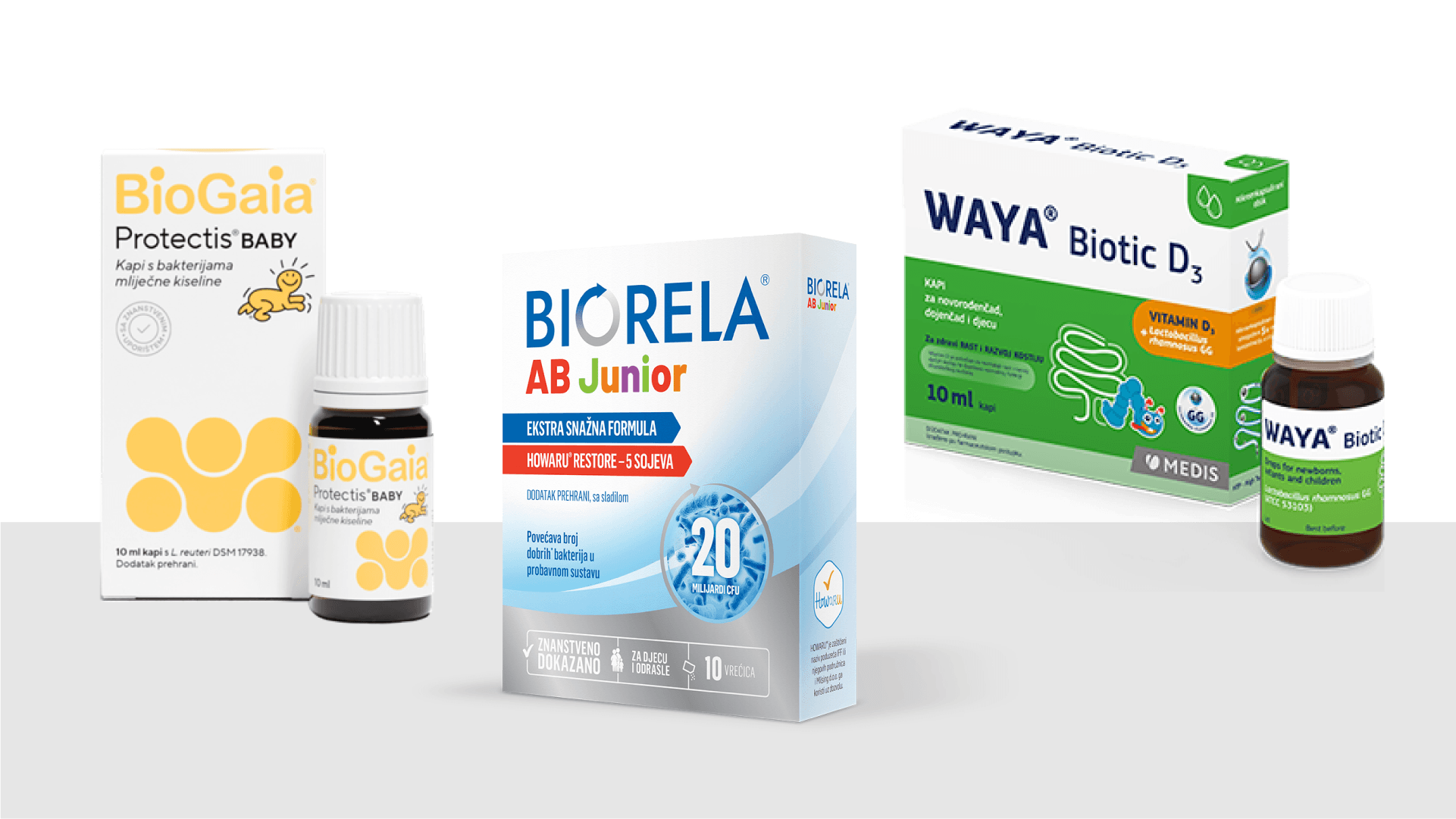
When it comes to the health and digestion of our little ones, parents often ask themselves: what is the best probiotic for children and how does it actually help? Probiotics are live microorganisms, better known as good bacteria for children, that restore the balance of intestinal microflora. From the moment of birth and throughout childhood, these allies help strengthen immunity, relieve colic in babies, and are indispensable during antibiotic therapy.
From the moment of conception, through childhood and into adulthood, probiotics contribute to the prevention of disease and are also very useful in treatment. These good bacteria are naturally present in fermented dairy products and pickled vegetables. The most commonly used probiotics are various species of the genus Bifidobacterium (normal inhabitants of the large intestine) and Lactobacillus (normal inhabitants of the intestines and vagina).
In this article
Why are probiotics important for children and babies?
Children's intestinal microflora is still developing. While adults have a stable system, children are more susceptible to changes due to diet, staying in groups (kindergarten, school) or taking medications. Probiotics for children are not the same as those for adults – they contain specific strains such as Bifidobacterium infantis or Lactobacillus rhamnosus GG which are naturally present in the child's body.
How to buy the best probiotic for children and babies?
The best probiotic for children is one that offers a good balance of price, quality, and suitability of the composition for the child's age and specific needs. It is known that probiotics can have a number of beneficial effects on health, including improving digestion, strengthening the immune system, and reducing the risk of certain diseases.
In this guide, we provide an overview of the highest quality solutions tailored to your child's specific needs, taking into account composition, safety, and ease of use.
What is the difference between probiotics for adults and children?
Probiotics are generally safe for adults and children, but there are slight differences between them that can affect how they are used.
There are many probiotic bacteria, and among them there are different genera, species and strains. The same strains are not used for all purposes, so adults, children, pregnant women and babies will not use the same preparations. Probiotics intended for certain age groups usually follow the natural composition of the intestinal microflora of those age groups. For example, probiotics for children contain lower concentrations of probiotics and different strains than probiotics for adults.
When we talk about children's probiotics, today there are different formulations to make them as acceptable as possible for children to use. There are probiotics in the form of liquids, candies, chocolates, powders and other forms that can be mixed into food.
In probiotics for infants, we most often come across strain Bifidobacterium infantis, which helps break down the nutrients in breast milk. Such help is most often needed by children born by caesarean section, because they have significantly less developed intestinal microflora at birth, considering that they do not pass through the vaginal canal.
When is it time to introduce probiotics?
Probiotic for babies and newborns (cramps and colic)
Infants with colic often have a different microflora composition. Research shows that the strain Lactobacillus reuteri Protectis significantly reduces the duration of crying in babies.
Probiotic is especially recommended for babies born by caesarean section, because they do not pass through the vaginal canal and need additional support for the development of immunity.
Probiotic for children with antibiotics
Probiotics are very useful in preventing diarrhea that can occur during and after the use of antibiotics. Since antibiotics destroy not only harmful bacteria but also beneficial bacteria in the intestines, probiotics are there to maintain and replace a sufficient number of beneficial bacteria.
It is important to note that in this case the probiotic is taken at least three hours after taking the antibiotic, so that the antibiotics would not destroy the good bacteria of the probiotic.
LGG, Bifidobacterium lactis, Streptococcus thermophilus i Saccharomyces boulardii are the most commonly used strains in such research.
Probiotic for diarrhea in children
Probiotics bring the intestinal microflora into balance, and can reduce the duration and severity of infectious diarrhea in children, which is most often the result of a viral infection with the ROTA virus, followed by the NORO virus. These beneficial effects of probiotics have been proven mainly for genera Lactobacillus and Bifidobacterium and for yeast cells Saccharomyces boulardii.
Probiotic to help with allergies
It has been shown that the preventive use of probiotics during pregnancy and breastfeeding, that is, during the first six months of life, reduces the risk of allergies and atopic diseases in children. The scientific study PANDA (=Probiotics AND Allergy) from 2003 proved that 3 strains of good bacteria: Lactococcus lactis W58, Bifidobacterium lactis W52 and Bifidobacterium bifidum W23 can have a positive effect on the imbalance between TH1 and TH2 cells in allergic and atopic patients.
Probiotic to strengthen immunity
Favorable intestinal microflora contributes to our metabolic functions, protects us from pathogens and strengthens the body's defense system. Regular intake of probiotics during winter days in preschool children can reduce the intensity of cold symptoms such as fever, cough and stuffy nose. The mentioned beneficial effects were tested for two types of bacteria, Lactobacillus acidophilus i Bifidobacterium animalis,
In older children, probiotics are used somewhat less often for preventive purposes. They are mainly recommended before going on a trip (especially on trips to distant world destinations) or in case of acute diarrhea.
The best probiotics for babies and newborns
It has been scientifically proven that infants with colic have a different composition of intestinal microflora than infants without colic, and therefore probiotics for newborns are considered a potential solution.
It has been shown that the preventive use of probiotics during pregnancy and breastfeeding, i.e. during the first six months of life, reduces the risk of allergies and atopic diseases in children.
The scientific study PANDA (Probiotics AND Allergy) from 2003 proved that 3 strains of good bacteria: Lactococcus lactis W58, Bifidobacterium lactis W52 and Bifidobacterium bifidum W23 can have a positive effect on the imbalance between TH1 and TH2 cells in allergic and atopic patients.
OMNi-BiOTiC PANDA – For pregnant women, infants and nursing mothers
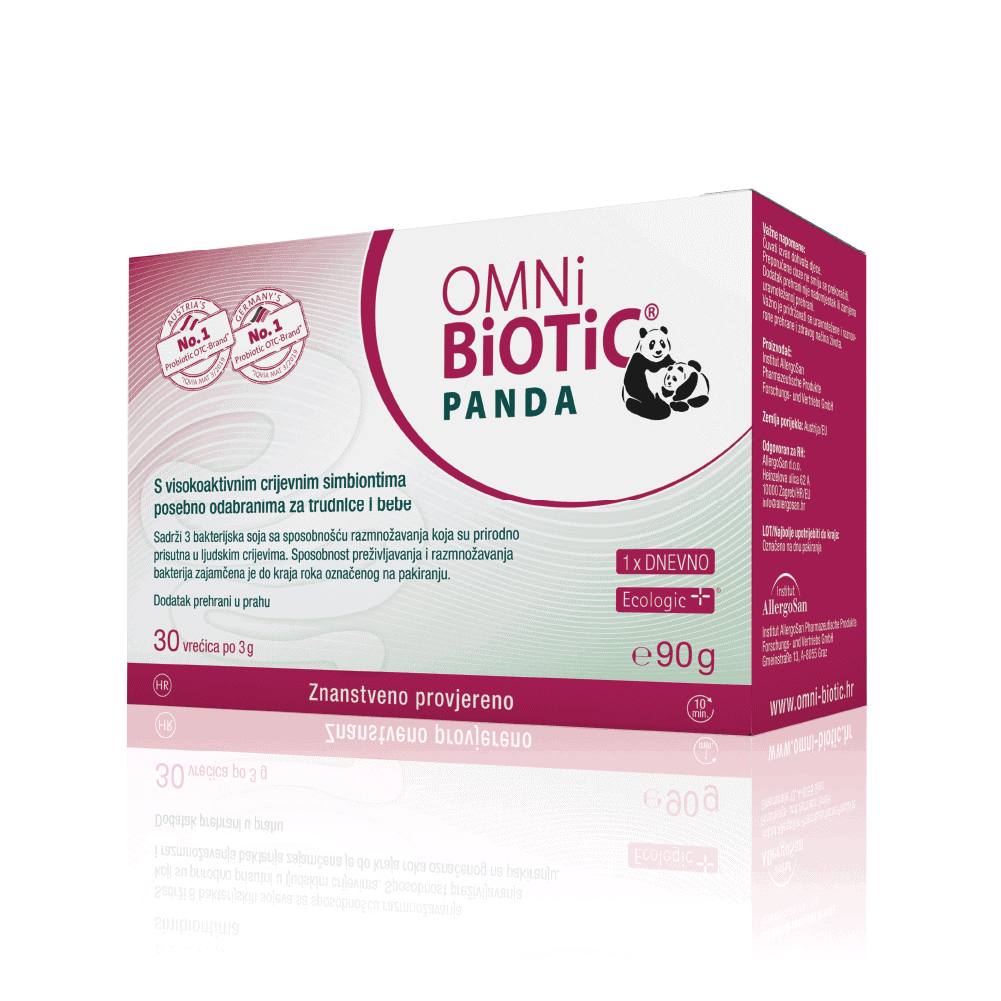 OMNi-BiOTiC®, PANDA Probiotic, 30 Bags, For Mother and Child From Day One
OMNi-BiOTiC® PANDA is a dietary supplement containing a mixture of high-quality intestinal cultures of microorganisms from the human digestive system with the ability to reproduce. From the first day for mother and child, as well as people with allergies and those prone to allergies.
In the PANDA (Probiotics AND Allergy) scientific study, which was conducted at the Wilhelmina Children's Hospital in Utrecht, the Netherlands, it was proven that a special combination of probiotic bacteria, contained in the synbiotic OMNi BiOTiC® PANDA, during pregnancy (from the 32nd week of pregnancy onwards) and in the 1st year of the child's life, can have a positive effect on the unbalanced immune system of mother and child. It is good to work on immunity even before the baby is born.
Type of use:
Adults:
Mix 1 sachet daily (3 g) in approximately 100-200 ml of lukewarm water or milk. Wait 10 minutes and stir gently before consumption. It is recommended to drink on an empty stomach: before breakfast or going to bed.
Infants:
Mix 1 sachet daily (3 g) in approximately 10 ml of lukewarm water, infant formula or breast milk. Wait 5 minutes and stir gently before consumption. The product can be added immediately or distributed with multiple feedings.
Pregnant women:
Based on data from the PANDA scientific study (Probiotics AND Allergy), if you have an allergic imbalance, it is recommended to use OMNi-BiOTiC® PANDA synbiotics daily from the 32nd week of pregnancy onwards.
Breastfeeding:
A new mom can continue to take the synbiotic OMNi-BiOTiC® PANDA every day.
BioGaia, Protectis Baby – From day one
 BioGaia, Protectis Baby Drops, 5ml, For Babies, From Day One
BioGaia Protectis Baby drops are a nutritional supplement in the form of drops with L. reuteri Protectis® for children from birth onwards. Safe for babies from day one. Suitable for long-term use.
Just five drops once a day provides the recommended daily dose of 100 million live bacteria Limosilactobacillus reuteri DSM 17938, replenishing the microflora in the digestive tract.
How to use: Shake well for 10 seconds before each use to mix all ingredients well. To dose the drops, tilt the bottle and give the drops with a spoon. It is recommended to take 5 drops once a day. The drops are administered orally, using a spoon. Do not add to hot food, hot drinks or give directly from the bottle into the mouth as this may reduce the quality of the product.
The best probiotics for children one year and older
When we talk about children's probiotics, today there are different formulations of them, all in order to make them as acceptable as possible for children to use.
Probiotics for children come in different forms: liquid supplements, candies, chocolate bars, or powder.
Biorela, Choco Multi Kids – From 1 year old
 Biorela, Choco Multi Kids, 20 Chocolate Bars, For Immunity and Growth – 1 Year and Older
Biorela Choco Multi Kids is a children's multivitamin with the good* bacteria HOWARU® Bifido – Bifidobacterium lactis HN019™ and Lactobacillus rhamnosus HN001™ for the daily protection of children's immunity and healthy growth and development.
Directions: Children 1 to 3 years old take half (½) stick per day. Children over 3 years old and adults take one (1) stick per day.
Waya D3 Drops – From 2 years old
 Waya, D3, Drops, 10ml, For Normal Growth and Development - 2 Years and Older
Waya D3 Drops are the only drops with a probiotic culture Lactobacillus rhamnosus GG and vitamin D.3 in oil suspension, therefore the likelihood of convulsions in neonates and infants is minimal.
Vitamin D is needed for the normal growth and development of children's bones and contributes to the normal function of the immune system.
Type of use:
- Infants and children up to 2 years of age: 7 drops 1 × per day
- Children after 2 years of age: 10 drops 1 × per day
The product has a naturally present sediment, so shake the bottle well before each use. After shaking, the product becomes naturally cloudy. The product has a neutral smell and taste. Drops Waya Use D3 for at least two weeks. They are also suitable for long-term use. It is best to take the drops on their own on a teaspoon. If you are being treated with an antibiotic, take the drops at least 2 hours before or after the antibiotic is administered.
Biorela, AB Junior – From 3 years old
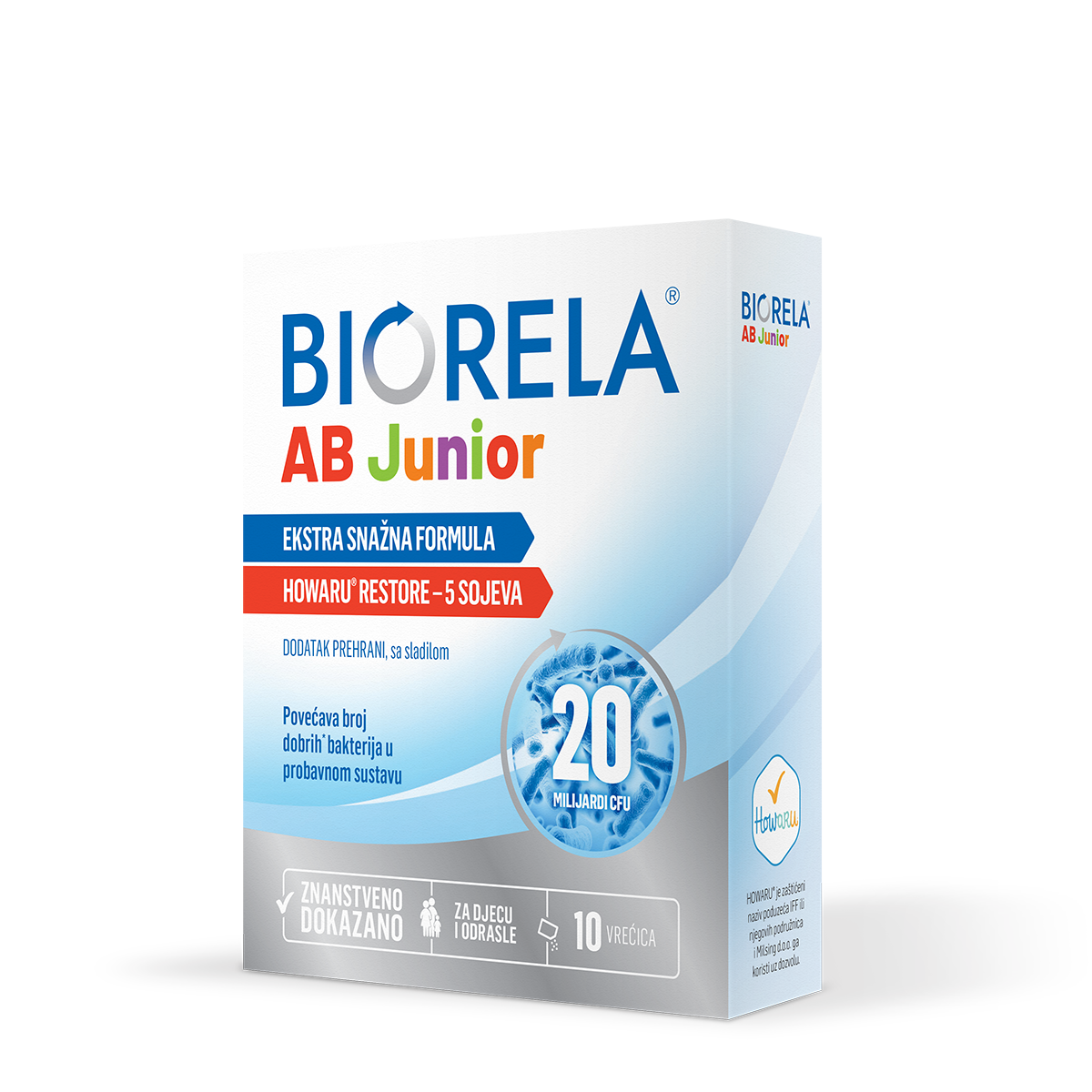 Biorela, AB Junior, 10 Bags, Cultures of Good Bacteria – 3 Years and Older
Biorela® Junior is a powerful dose for quick results in a child-friendly form. Contains HOWARU® RESTORE premium combination of good* bacteria cultures.
Directions for use: Children over 3 years of age and adults: One (1) sachet daily. Contents of one sachet Biorela® Junior bags mix in a cold drink (water, juice, milk) and drink. Do not mix with hot ingredients. When using with an antibiotic, take the product 1 hour before or 3 hours after taking the antibiotic.
Frequently asked questions about probiotics for children
What is the best probiotic for babies with colic?
To relieve infant colic and cramps, the strain Lactobacillus reuteri Protectis is most often recommended. This strain has been clinically tested and has shown excellent results in reducing crying in babies. Products like BioGaia Protectis Baby Drops or Waya D3 Drops They are ideal for newborns because they come in a practical form of drops that are easy to dose.
When to start giving a probiotic to a child with an antibiotic?
You should start taking a probiotic for children with antibiotics from the first day of antibiotic therapy. It is crucial to leave at least 3 hours between taking the antibiotic and the probiotic so that the antibiotic does not kill the good bacteria. Continue taking it for another 7–10 days after the end of the course of treatment to fully restore the intestinal flora.
Is there a difference between probiotics for babies and probiotics for older children?
Yes, there is a significant difference! Probiotics for babies contain specific strains such as Bifidobacterium infantis which are adapted to the digestive system of newborns and come in the form of drops. On the other hand, probiotics for children 1 year and older often contain higher concentrations of different strains and are available in forms that are easier for children to accept – chocolate bars, candies or powder to mix into drinks.
How long should probiotics be given to children?
This depends on the purpose of use. For acute problems such as diarrhea or recovery from antibiotics, 1-2 weeks is sufficient. To boost immunity during the winter months or as a preventative measure for children attending kindergarten, cycles of 4-8 weeks are recommended. Probiotics are safe for long-term use, but always monitor your child's reaction and consult a pediatrician.
Can probiotics help with allergies and atopic dermatitis?
Research shows that early administration of specific probiotic strains (such as those in OMNi-BiOTiC® PANDA) during pregnancy and the first months of life can reduce the risk of developing allergies and atopic diseases. If a child already has allergies, probiotics can help regulate the immune response, but they do not replace medical therapy.
How do you know if a probiotic is working?
Positive signs include: reduced colic and crying in babies, more regular stools, fewer episodes of diarrhea or constipation, and fewer colds. Most parents notice improvement after 7-14 days of regular use. If you don't see any change after a month, talk to your pharmacist about possibly changing the product or strain.
How long should a child be given a probiotic?
The duration of use depends on the reason for use. If a probiotic for children is used with an antibiotic, it is recommended to take it throughout the entire antibiotic course (with a 3-hour interval after taking the antibiotic) and for at least 7 to 10 days after the end of therapy to allow the microflora to fully recover. For general immunity boosting, probiotics are usually taken in cycles of several weeks, especially during the viral season.
Can I combine several different probiotics at once?
As a rule, it is not necessary to combine multiple products because quality preparations, such as those we have listed, are already formulated with the optimal number and type of strains. It is better to stick to one proven product and monitor how your child reacts. If you want to change products, it is recommended to take a short break between two different preparations.
Do probiotics cause side effects in children?
Probiotics are generally very well tolerated. In rare cases, at the very beginning of taking them, mild and transient bloating or changes in stool may occur. This is usually a sign that the intestinal microflora is adapting to the “good bacteria”. If symptoms persist, discontinue use and seek medical advice.
Conclusion
Choosing the right probiotic for children does not have to be complicated if you are guided by the specific needs of your little one. Whether you are looking for a solution for infant colic, support with an antibiotic, or you want to strengthen the body's resistance before starting kindergarten, the key is to choose proven strains such as L.reuteri or LGG.
By introducing good bacteria into your daily routine, whether through drops for the youngest or delicious chocolates for older children, you provide them with important support for proper growth and development.
Note: Before introducing any dietary supplement, especially to newborns, we recommend consulting a pediatrician or pharmacist.
More recommendations for products for children and mothers
Product catalog:
Continue reading:
The best probiotics for adults
Literature
Lopez-Santamarina A, Gonzalez EG, Lamas A, Mondragon ADC, Regal P, Miranda JM. Probiotics as a Possible Strategy for the Prevention and Treatment of Allergies. A Narrative Review. Foods. 2021 Mar 25;10(4):701. doi: 10.3390/foods10040701. PMID: 33806092; PMCID: PMC8064452.
Simonson J, Haglund K, Weber E, Fial A, Hanson L. Probiotics for the Management of Infantile Colic: A Systematic Review. MCN Am J Maternal Child Nurs. 2021 Mar-Apr 01;46(2):88-96. doi: 10.1097/NMC.0000000000000691. PMID: 33315632.
